Skull Up
- 4.6
- Rating
- 100.00K
- Installs
- Free
- Price

 Analysis by App-foxy
Skull Up is a free card game from Efun Game Ltd. that immediately presents itself with a darker personality than the average casual deck title. Its short store phrase, “Skull Up,” suggests a compact, attitude-driven experience rather than a gentle solitaire clone, and that impression matters because card games often live or die by presentation. I found the appeal easiest to understand in short sessions: the game is built for the moment when I want something structured enough to hold my attention, but not so demanding that it takes over an entire evening.
The game is available for players aged Everyone 10+ and runs on Android devices using version 7.0 or later. It is free to start, with optional purchases ranging from $0.29 to $99.99 per item. That wide purchase range is worth keeping in mind before settling into the progression, especially if you are the kind of player who prefers a completely even playing field. The current version is 1.0.13, and the release date is February 2, 2026, so this feels like a relatively young game rather than a long-established card institution.
What I like most about its first impression is that the visual identity gives the game a clear direction. It does not feel as though a generic card framework has simply been covered with a skull graphic. The darker styling creates a mood that makes each session feel more deliberate, even when I am only playing for a few minutes. At the same time, the game remains approachable enough for someone who normally avoids complicated strategy games. That balance is the central question here: does the atmosphere support the card play, or is it only decoration?
You May Also Like

 Pandora - Music & Podcasts
Pandora’s Music Is Easy to Start, but Harder to Recover
Pandora’s strength is its low-effort path from a seed to a station. Its weak spot is how much confidence it asks you to place in connection, setup, and quiet recovery.

 8 Ball Pool
 Is Built on Rivalries, Rematches, and Routine
A close look at the rivalries, rematches, shared routines, and unanswered safety questions that turn a quick pool match into a persistent mobile community.

 Samsung Music
’s Quiet Strength Is Playing What You Already Own
Its reach comes less from spectacle than from dependable access to a personal library. That simplicity is both the app’s strongest retention engine and its ceiling.

 AccuWeather: Weather Radar
AccuWeather Review: A Quick, Clear Forecast for Everyday Decisions
For everyday plans, the best forecast is the one you can understand quickly. AccuWeather makes rain timing, radar, and local conditions easy to act on, with a few trade-offs.

 Hill Climb Racing
Why Hill Climb Racing Still Turns Crashes Into One More Run
A tiny car, a bumpy hill and one more upgrade: Hill Climb Racing keeps resurfacing because its simple chaos makes every near-miss feel personal.

 AliExpress - Shopping App
AliExpress Makes Global Shopping Feel Personal, but Shoppers Bear the Risk
AliExpress turns a global marketplace into a pocket-sized discovery engine. Its reach is useful, its shopping loop compelling, and its trade-offs easy to miss.
More From Our News Desk
View All News


How the visual world gives the cards a personality
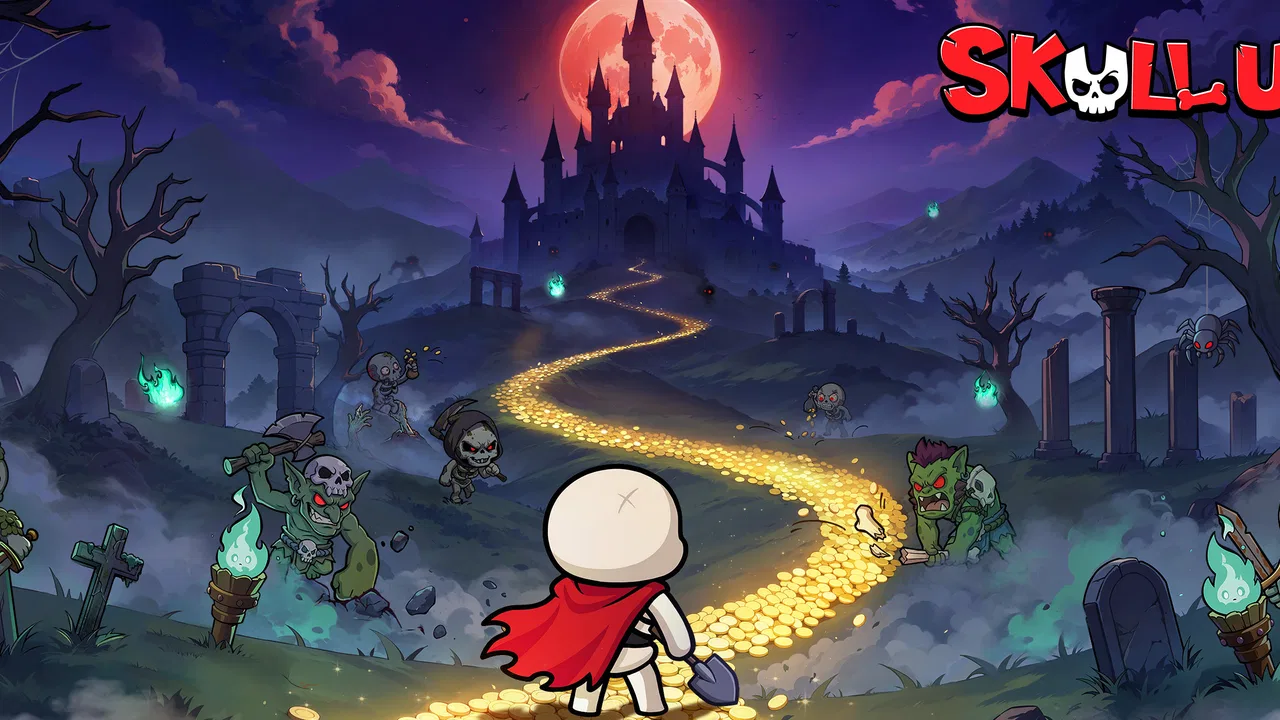
The art direction is the strongest part of the game’s identity. Skull imagery can easily become noisy or childish, but here it works as a visual language that tells me to expect a little more edge than I would find in a traditional family card game. The setting feels designed around tension and advancement, which helps the act of leveling feel connected to the game’s overall tone rather than added as a disconnected reward loop.
I especially appreciate that the visual theme makes the game recognizable at a glance. Many mobile card games use bright colors, fantasy heroes, or familiar casino motifs, and those choices can blur together. Skull Up instead leans into a macabre style. That does not automatically make it deeper, but it gives the experience a stronger memory hook. When I return after a break, I know what kind of mood I am stepping back into.
The important trade-off is that this atmosphere will not suit everyone. If you want a clean, traditional card table with neutral symbols, the skull-focused presentation may feel too theatrical. Players who enjoy dark fantasy styling will probably find it more inviting, while people looking for a calm puzzle session may prefer a softer card game. The age guidance of Everyone 10+ also places it in a broad, accessible space, but the visual tone is still more intense than that rating alone might suggest.
The setting also affects how I read the progression. The store summary points toward staying “Skully” and continuing to level, while the pre-order message mentions an SSS Hero and a Beginner’s Set. I read that as a clear signal that the game wants progression to be part of the identity, not merely a background counter. For a new player, this creates an obvious early goal: learn the card flow while building toward stronger milestones. The risk is that the reward structure may become more interesting than the decisions made during a match.
Why the theme helps, and where it can get in the way
A useful way to approach the game is to treat its artwork as a pacing tool. The skull aesthetic creates a sense of pressure, so even a short card sequence can feel like a small challenge instead of routine sorting. I found that helpful when playing during a commute or while waiting for an appointment. The game has enough personality to keep a brief session from feeling anonymous.
However, a strong theme can also make visual information harder to read if effects, icons, or character elements compete with the cards. My practical advice is to spend the opening sessions learning the symbols before chasing rewards. In a progression-based card game, recognizing what is important at a glance is more valuable than making a fast move that looks impressive. I would also avoid judging the game from its first few minutes alone; the presentation is immediate, but the value comes from understanding how the card decisions and leveling structure reinforce each other.
This is one of the less obvious strengths of the design: the art gives the player a mental shortcut. I can use the mood to remember that I am not simply clearing a hand; I am moving through a themed progression. That does not replace strategy, but it makes the different parts of the game feel more connected. For players who enjoy a strong setting in their card games, that cohesion is more meaningful than a collection of flashy effects.
Sound, rhythm, and the shape of a short session
Sound is particularly important in a card game because the mechanics are often built from small actions: selecting, confirming, resolving, and moving on. A good audio layer makes those steps feel like a rhythm. Skull Up’s darker presentation benefits when its sound design supports tension rather than turning every action into a loud announcement. I found the overall mood more convincing when the audio worked as a background pulse instead of demanding attention.
The pacing is best understood as a series of compact decisions. I can play with a focused mindset, looking at the hand and thinking about the next useful move, or I can use the game as a light distraction. That flexibility makes it easier to fit into everyday routines. A realistic example is a ten-minute break between tasks: I can start a session, make a few meaningful choices, and stop before the game becomes a commitment. It is also suitable for a longer sit-down session if I want to keep pursuing progression.
That convenience comes with a limitation. Short-session design can sometimes encourage me to keep playing because the next reward feels close. The game’s leveling emphasis makes that especially noticeable. I recommend deciding in advance whether I am playing for a single break or for a longer run. Without that boundary, a “quick card game” can become a repeated cycle of one more attempt, one more upgrade, and one more push toward the next milestone.
The sound and rhythm also affect how accessible the game feels. If I am playing around other people, I prefer to keep audio low because the atmosphere is not essential to understanding every card decision. The visual cues carry much of the practical information. That makes the game easier to use in public spaces, although players who want a deeply cinematic audio experience may find the card mechanics remain the real focus.
How I would use it during an ordinary day
My preferred routine would be to play one session when I have a short pause, then review what I learned before starting again later. Instead of spending every reward immediately, I would first identify whether it improves the way I handle difficult hands or simply raises a number. That small habit helps separate useful progression from the excitement of collecting.
For a new player, I would begin without buying anything. The free entry makes it easy to test whether the card flow, dark style, and leveling pace actually suit you. After several sessions, you will have a better idea of whether the game’s decisions are holding your attention or whether the presentation is doing most of the work. This is a more sensible approach than treating the first attractive offer as necessary for enjoyment.
The rhythm is also a reason I would not recommend the game to someone seeking a purely relaxing card pastime. Its mood suggests pressure and forward movement, while traditional solitaire or a simple matching game is usually better when the goal is quiet repetition. Skull Up is more appropriate when I want the cards to feel like part of a larger climb.
Where the card mechanics and progression fit together
As a card game, Skull Up needs to make its decisions matter beyond the surface. The most enjoyable way to approach it is to pay attention to how each move supports the next one, rather than treating every hand as a race to finish. The leveling structure gives those choices a longer context. Even when a single round is not memorable, it can still contribute to the feeling that I am improving a character, a collection, or my own understanding of the system.
The mention of an SSS Hero and a Beginner’s Set also tells me that the early game is designed to welcome newcomers while pointing toward a more ambitious progression path. That can be helpful for players who want guidance. A beginner package gives a new player something concrete to work toward, while the higher-tier hero language creates a sense of aspiration. The trade-off is familiar in free-to-play card games: the clearer the reward ladder becomes, the more important it is to decide whether I am playing for skill or for collection progress.
I would approach the mechanics with three simple priorities. First, learn what the game considers a strong move before trying to play quickly. Second, keep track of which rewards actually change my options. Third, resist spending simply because a purchase appears at the moment of frustration. Those habits are especially useful here because the purchase range extends from a small low-cost item to a much larger one. The game is free, but free entry does not mean every progression route will feel equally comfortable without spending.
The game is a better fit for players who enjoy card systems with a sense of growth than for those who want a fixed ruleset that never changes. If you like returning to improve your approach, unlock something, and then test that progress, the structure should feel motivating. If you prefer a pure contest where every player starts with identical tools, the progression layer may feel like interference rather than depth.
Three practical lessons I would use early
My first tip is to separate learning sessions from reward sessions. During the first few rounds, I would focus on recognizing the card relationships and the timing of decisions, even if that means progressing more slowly. Once the basic flow feels natural, I would start optimizing for rewards. This prevents the common mistake of copying a fast pattern without understanding why it works.
My second tip is to treat the beginner-oriented rewards as a teaching aid, not an obligation. A Beginner’s Set can make the opening feel smoother, but it should not convince me that I need to buy immediately. I would compare what it changes in actual play with what I can already accomplish for free. If the difference is mostly cosmetic or accelerates a track I am not enjoying, keeping my money is the better decision.
My third tip is to use the atmosphere as a signal for pacing. When the game feels tense, I would slow down and inspect the hand rather than rushing because the presentation encourages urgency. This is a subtle advantage of the dark visual language: it makes me more aware of pressure. Used properly, that can sharpen decision-making. Used carelessly, it can make a routine move feel more urgent than it really is.
There is also a practical question about device compatibility. Because the minimum operating system is Android 7.0, the game remains accessible to many older Android devices, although actual comfort will still depend on the phone’s screen, performance, and storage situation. I would give it a fair trial on the device I plan to use most often instead of assuming that a technically supported phone will provide the same smooth experience as a newer model.
Who should choose this game, and who should pass
I would recommend Skull Up to someone who wants a card game with a distinct dark-fantasy mood, compact sessions, and a visible sense of leveling. It is particularly appealing if you enjoy games where the presentation encourages you to think of each match as part of a larger journey. The free price makes experimenting easy, and the average rating of 4.6 from around 3.9 thousand ratings suggests that the current audience has responded positively overall. More than 100 thousand installs also indicate that it has found a meaningful early player base.
I would be more cautious recommending it to a player who dislikes in-app purchases, hero-centered progression, or any pressure to keep improving after a round ends. The price range for optional items is broad enough that spending discipline matters. I would also point traditional card-game fans toward a simpler alternative if they want familiar rules, minimal presentation, and no dark thematic layer. A classic solitaire app is better for quiet, repetitive play; a competitive card title with a fixed deck-building environment is better for players who want strategy to be the entire focus.
The game sits between those options. It is not merely a passive card pastime, but it also does not present itself as a serious tabletop simulation. Its appeal comes from the combination of a recognizable card foundation, a skull-themed identity, and a progression loop that gives short sessions a reason to continue. That combination is specific enough to attract the right audience, but it also means the game will not satisfy every kind of card player.
Another question I would ask before installing is whether you want a mature, fully settled ecosystem or are comfortable with a newer release. Since it launched on February 2, 2026, and is currently at version 1.0.13, the experience belongs to an early stage of its life. That can be exciting because the game feels fresh, but it also means players should expect the balance and long-term rhythm to matter more as they spend additional time with it. I would start casually and avoid making large purchases until I know the progression remains enjoyable.
My verdict on the atmosphere and the playable mood
Skull Up succeeds when its art direction, sound, and pacing all point toward the same idea: card play as a small climb through a moody, skull-themed world. The presentation gives the game a stronger personality than a standard card app, while the short-session rhythm makes it easy to fit into a normal day. I enjoyed the way the setting encouraged me to treat each decision as part of a broader progression rather than an isolated hand.
Its weaknesses are tied to the same design choices. The dark style will not appeal to everyone, and the leveling structure may feel less satisfying to players who want a pure card challenge. Optional purchases also require restraint, particularly for anyone tempted by high-tier progression or hero-related rewards. I would not install it expecting a completely neutral, no-pressure card table.
For me, the best way to play is free first, slowly, and with attention to the actual decisions. Learn the card flow, notice which rewards improve the experience, and use the atmospheric presentation to create focus rather than urgency. If that approach sounds appealing, this game offers a distinctive alternative to brighter, more conventional card apps.
My final recommendation: try it if you want a free card game with a clear dark identity and a progression-driven rhythm, but keep your expectations practical. The strongest reason to stay is the way the mood makes short card sessions feel purposeful. The strongest reason to leave is if you would rather have simple rules, equal starting conditions, or a completely quiet alternative. For players in the middle, Skull Up is worth exploring on its own terms.
The developer, Efun Game Ltd., has given the game a recognizable starting point, and the current version provides a straightforward way to see whether that identity matches your taste. I would treat it as a focused, atmospheric card experience rather than an all-purpose replacement for every card game on mobile. In that role, it has a clear place: a compact game where visual mood and leveling give ordinary card decisions a darker sense of momentum.
FAQs for Skull Up
01What is Skull Up and what can I expect from this app?
Skull Up is an engaging puzzle-platformer game that challenges players to navigate through intricate levels filled with obstacles and traps. With its unique skull-themed design and intuitive controls, players can expect a mix of strategy and quick reflexes to progress. The game offers various levels of difficulty to keep players entertained and challenged.
02Is Skull Up free to play, or does it include in-app purchases?
Skull Up is free to download and play, offering a substantial amount of content without any initial cost. However, it does include optional in-app purchases. These purchases are designed to enhance the gaming experience, offering items like power-ups or cosmetic upgrades, but they are not necessary to enjoy the core game.
03What are the system requirements for Skull Up on Android and iOS?
For Android, Skull Up requires version 5.0 (Lollipop) or higher, and for iOS, it requires iOS 11.0 or later. The game is optimized for both smartphones and tablets, ensuring smooth gameplay across a variety of devices. It is recommended to have at least 200 MB of free storage space for installation and updates.
04Does Skull Up offer any multiplayer or social features?
Yes, Skull Up includes social features that allow players to connect with friends and compete on leaderboards. While the core gameplay is single-player focused, these features add a layer of competition and community interaction. Players can challenge friends to beat their scores or collaborate to solve particularly tough levels.
05Are there any accessibility features available in Skull Up?
Skull Up is designed with accessibility in mind, featuring options like adjustable text size, colorblind modes, and customizable controls. These features aim to make the game enjoyable and accessible to a wider range of players, ensuring that everyone can have an engaging experience regardless of their individual needs.
Pros
- Intuitive controls for easy gameplay.
- Vibrant graphics enhance user experience.
- Regular updates with new levels.
- Minimal in-app ads for smooth play.
- Compatible with older devices.
Cons
- Limited offline functionality.
- Occasional in-app purchase prompts.
- Some levels feel repetitive.
- Requires frequent updates.
- No multiplayer mode available.

Skull Up
Gallery